Key Takeaways
- National project data shows the typical midrange remodel lands near $27,000, giving homeowners a realistic benchmark for planning material choices.
- Cabinets consume the largest share of any budget, so choosing stock or semi-custom boxes frees up money for upgrades elsewhere.
- Quartz and butcher block offer the look and durability homeowners want at prices well below natural stone slabs.
- Luxury vinyl plank and porcelain tile deliver flooring performance comparable to hardwood or stone at a fraction of the cost.
- Mixing high and low finishes, such as splurging on a hood but saving on a backsplash, keeps rooms looking expensive without overspending.
- Resale returns vary widely by project scope, with smaller refreshes often recouping more value than full gut jobs.
- Smart material swaps, honest labor estimates, and a contingency cushion are the three pillars of a budget that actually holds.
Walk into any showroom and the sticker shock hits fast. A single slab of marble can cost more than an entire set of stock cabinets. A professional range can eat up what some families spend on their whole project. The gap between dreaming and doing almost always comes down to one thing: the materials you pick.
Most homeowners start with a Pinterest board and a vague number in their head. Then the quotes roll in, and reality bites. The good news is that smart material selection can shrink a bill by thousands without making the finished room look cheap. You just need to know where the money hides and which swaps give you the best return on each dollar.
This guide walks through the categories that move the needle most. Cabinets, counters, flooring, appliances, and the small finishes that tie everything together. Each section tackles a specific problem homeowners run into and offers materials that solve it without blowing past a sensible budget.
What Does a Realistic Budget Actually Look Like?
Before picking finishes, you need a number to aim at. According to Angi, the national benchmark for a typical remodel in 2026 sits at $26,992, based on thousands of verified projects completed by its network of pros. That figure covers everything from demo to final cleanup for a midrange job. Projects in high-cost metros or with custom features push much higher, while cosmetic refreshes land well below.
HomeAdvisor breaks it down differently. Their data pegs most projects between $75 and $250 per square foot, rolled up with materials, appliances, and labor. That range matters because a 150-square-foot galley and a 300-square-foot open layout live in completely different financial universes, even when the finishes match.
The point is simple. The average cost of kitchen renovation only tells you where the middle sits. Your personal number depends on square footage, location, and how much you tear out. Nail down that figure first, then let materials fit inside it instead of the other way around.
How Budget Splits Across Categories
Industry data from the National Kitchen & Bath Association suggests a reliable breakdown for midrange projects: about 35 percent for cabinets, 20 percent for installation labor, 15 percent for appliances, 10 percent for countertops, 5 percent for flooring, 5 percent for lighting and electrical, 5 percent for plumbing fixtures, and the final 5 percent for design fees and contingency. Keep those percentages taped to your fridge while you shop.
Cabinet Solutions That Stretch Every Dollar
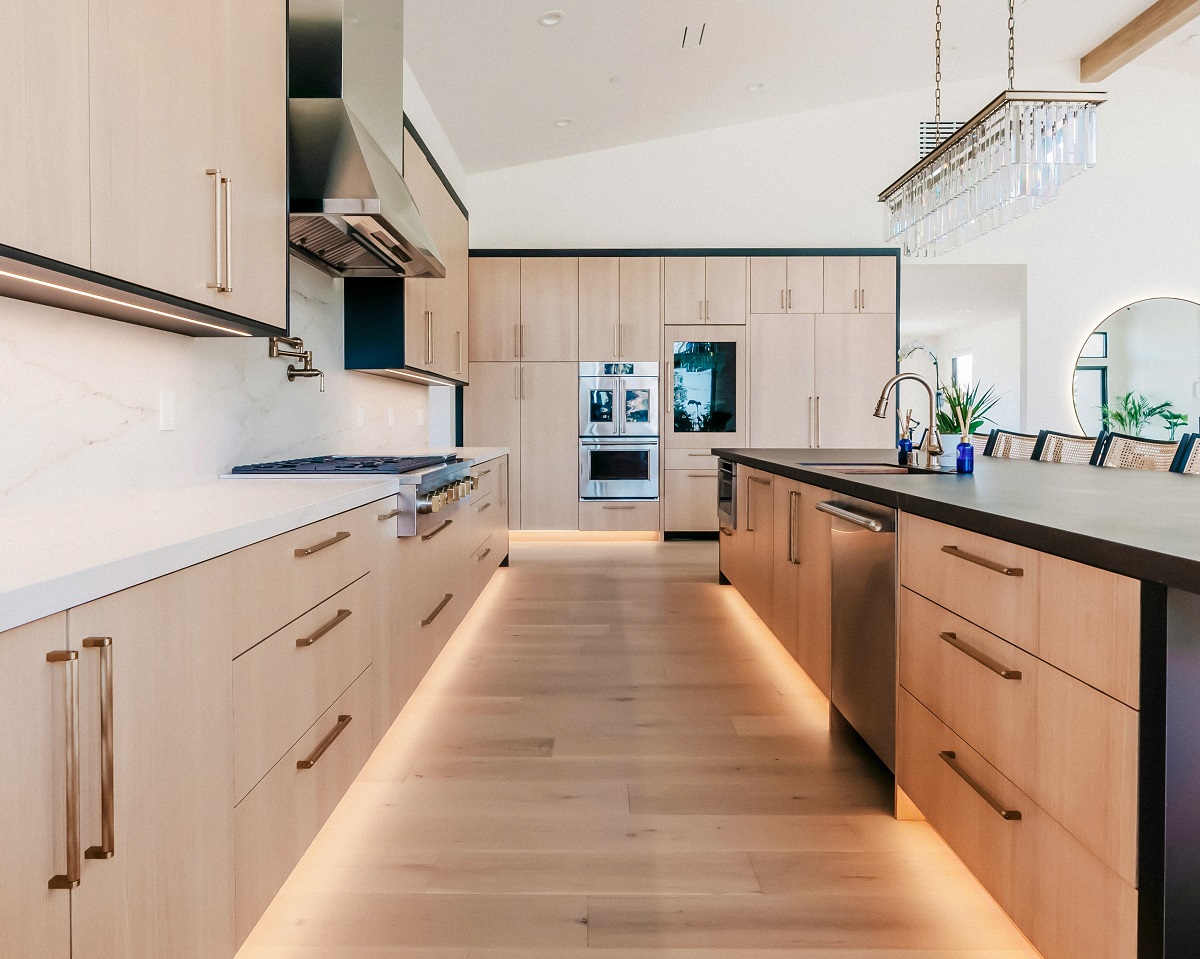
Cabinets are the single biggest line item, so this is where savvy choices pay off most. The trap people fall into is assuming custom is the only way to get something that looks good. It is not. Stock and semi-custom lines from reputable manufacturers now offer dovetail joints, soft-close hardware, and finishes that are hard to distinguish from bespoke work.
If your layout is standard, stock cabinets in common sizes can cut this category in half compared to custom boxes. Semi-custom gives you a middle path when you need a few modified widths or specialty inserts. Full custom only makes sense when your space has unusual angles or you want a built-in look that reads like furniture.
- Stock lines from big box stores or online retailers for straightforward layouts
- Semi-custom when you need two or three modified sizes
- Plywood boxes instead of particleboard for longer life at a modest upcharge
- RTA (ready-to-assemble) brands for the lowest price per linear foot
- Refacing existing boxes if the structure is solid but the doors look dated
Spending time on budgeting your kitchen remodel before you hit the showroom will help you know which cabinet tier actually fits your numbers. Walking in without that homework is how people end up financing upgrades they never planned for.
Countertops That Punch Above Their Price
Counters are the surface you touch every day, so cutting corners here usually backfires. That said, the gap between budget and premium materials has narrowed a lot in the past decade. Quartz, once a splurge, now competes with mid-tier granite on price while beating it on maintenance.
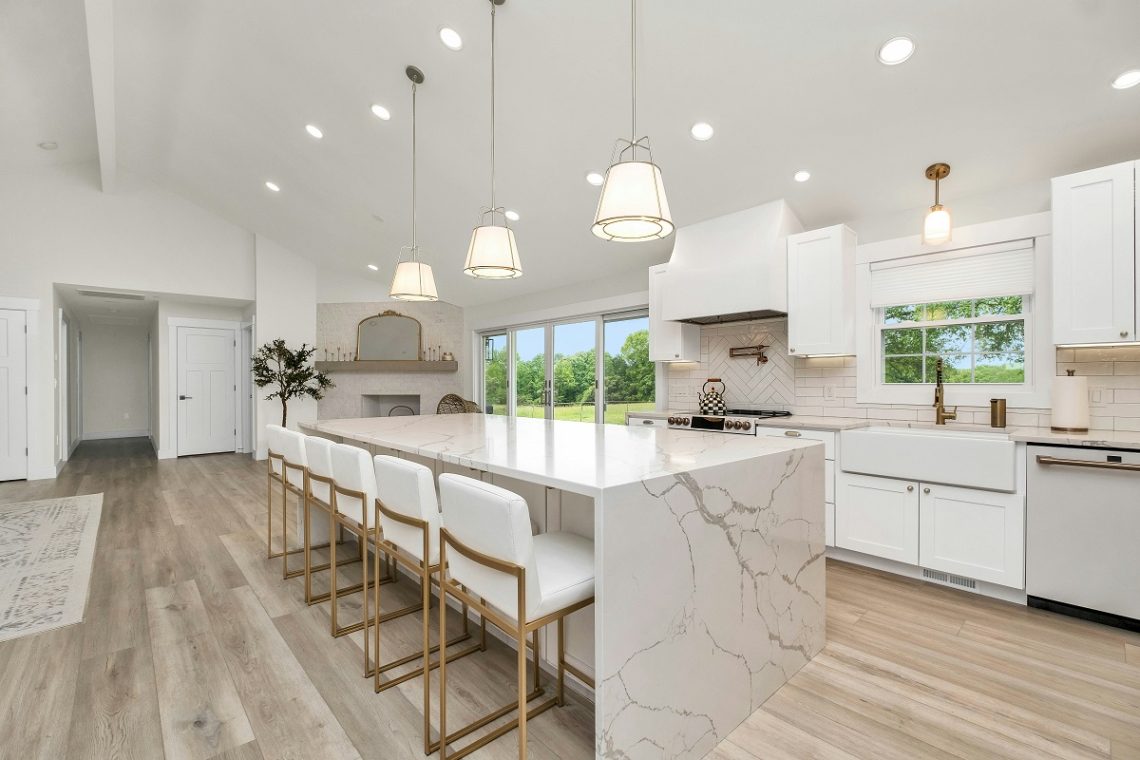
Butcher block brings warmth and costs a fraction of stone, though it needs oiling and is not ideal around the sink. Laminate has quietly made a comeback with realistic stone-look patterns and bevel-free edges that no longer scream 1995. For a waterfall island on a budget, large-format porcelain slabs mimic high-end marble veining without the staining risk.
When to Splurge and When to Save
Here is a rule that works. Splurge on the main run where you do most of your prep and entertaining. Save on the pantry, laundry nook, or any counter that lives behind closed doors. Nobody opens a butler’s pantry and judges you on the countertop material. That one mindset shift can trim a meaningful amount off the countertop line without touching the visible impact of the room.
Flooring Options Under Every Budget
Flooring sits underfoot and under appliances, which means replacing it later is a nightmare. Choose something durable the first time. The good news is that the best-performing floors for kitchens are no longer the most expensive.
Luxury vinyl plank leads the pack right now. It handles spills, drops, and dog nails without flinching, costs a fraction of real hardwood, and installs quickly over most subfloors. Porcelain tile remains the longest-lasting option and works beautifully with radiant heat, though installation labor is higher. Engineered hardwood splits the difference for homeowners who want real wood but need better moisture tolerance than solid planks allow.
- Luxury vinyl plank for the best price-to-performance ratio
- Porcelain tile when longevity and heat compatibility matter most
- Engineered hardwood for a real-wood look with better stability
- Sheet vinyl for ultra-tight budgets when the whole floor needs replacing fast
- Polished concrete if your subfloor already supports it and you love an industrial look
Pay attention to underlayment too. A quiet, cushioned pad under vinyl plank makes a cheap floor feel premium underfoot, and it is one of the smallest line items in the whole project.
Appliances That Deliver Without the Luxury Markup
Appliances are where brand loyalty and marketing muscle meet your wallet. The truth is that most mainstream brands build their midrange models on the same platforms as their premium ones. You are often paying for a logo, a handle shape, and a few connectivity features you will never use.
Shop the scratch-and-dent sections at local appliance dealers. A side panel ding that faces a cabinet wall is a non-issue, and the discount can run 20 to 40 percent off retail. Open-box models from warehouse clubs work the same way. Holiday weekends from Memorial Day through Labor Day consistently offer the deepest package discounts when you buy three or more pieces together.
- Match the finish across pieces, but do not feel locked into one brand for the whole suite
- Skip smart features you will not actually use day to day
- Choose a counter-depth fridge over a built-in for a similar look at half the price
- Induction cooktops now compete with gas on price and beat it on cleanup
- A good hood matters more than a flashy range, so put the dollars where the air moves
Where a Pro-Style Look Comes Cheap
Commercial-style ranges from brands like GE Cafe, Bosch, and KitchenAid give you the heavy knobs, stainless trim, and burner grates that read professional without the five-figure price tag of true pro lines. Pair one with a statement hood and nobody will ask what brand the oven is.
Backsplash and Finishing Touches on a Diet
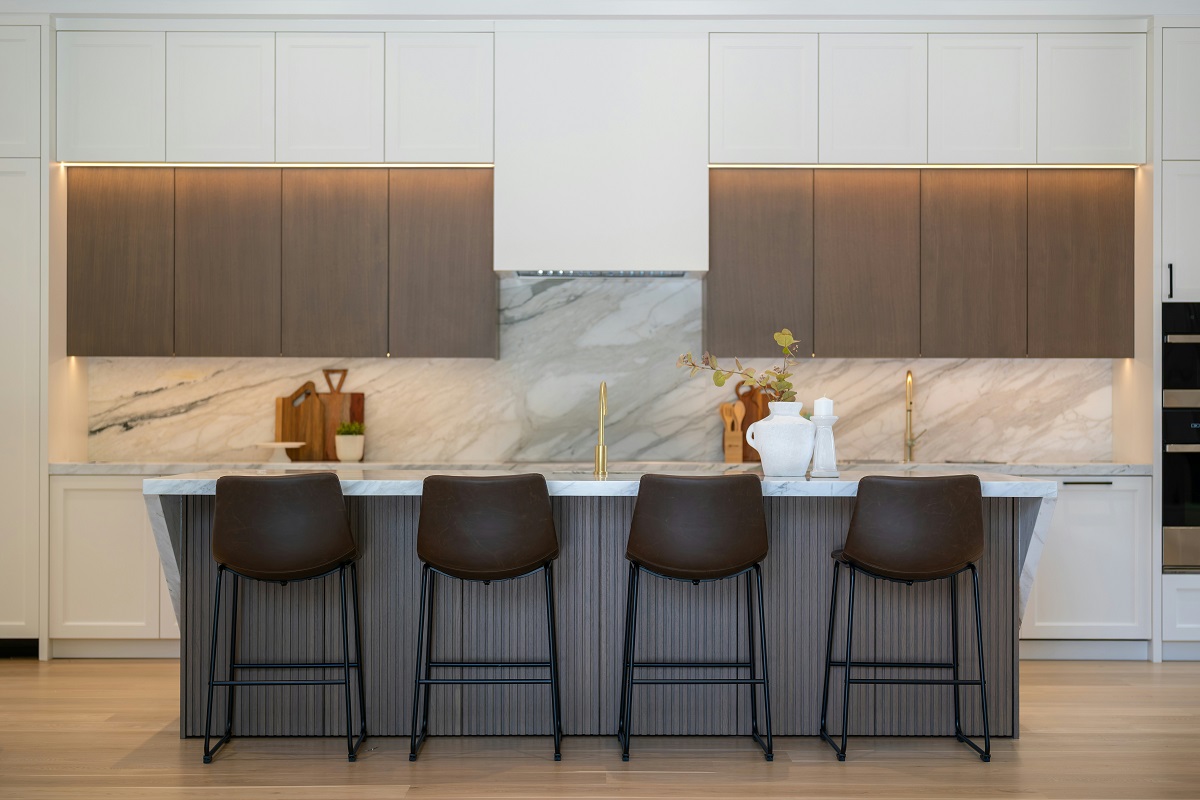
The backsplash is prime territory for saving money while looking like you spent a fortune. Subway tile in classic white runs just a few dollars per square foot and never dates. Peel-and-stick options have improved dramatically and work well for renters or short-term holds. For a custom look, mix a splurge accent behind the range with a plain field tile everywhere else.
Hardware is another sneaky win. Swapping builder-grade pulls for solid brass or matte black knobs transforms cabinet doors for pocket change compared to any other upgrade. Lighting follows the same logic. One statement pendant over the island paired with simple recessed cans costs less than a full designer fixture package and photographs just as well.
- Classic subway or large-format tile for an affordable, timeless backdrop
- A single accent zone behind the cooktop instead of tiling every wall
- Solid metal pulls in standard sizes, bought online in bulk
- One sculptural pendant paired with basic recessed cans
- Paint-grade trim and open shelving to fill walls without cabinet costs
Balancing Resale Value Against Personal Taste
Not every project needs to chase resale returns, but it helps to know where the market lands before you commit. Minor refreshes consistently recoup a higher percentage than full gut jobs, which is why many homeowners now plan two smaller phases instead of one giant overhaul. Neutral finishes travel better across buyer taste, so save the bold color choices for items that are easy to swap, like bar stools, pendants, or a painted island.
If you plan to stay a decade or more, lean into what you love. If a sale is on the horizon, stick to broadly appealing shaker doors, light counters, and warm neutral floors. The materials in this guide all play well in both scenarios, which is part of why they show up on so many project lists.
Building a Budget That Actually Holds
A plan on paper means nothing if the real bills blow past it. Three habits separate projects that finish on budget from the ones that drift. First, get three bids from licensed installers, not just one. The spread between the highest and lowest quote often reveals whether a bid is padded or missing scope. Second, price materials yourself before signing anything, even if the contractor offers to supply them. You will learn fast where the markups live.
Third, set aside a contingency of at least 15 percent for anything you cannot see behind the drywall. Old plumbing, outdated wiring, and surprise subfloor damage are nearly universal in homes built before 2000. Treat that cushion as spent money that you might get to keep, not as a slush fund for last-minute upgrades.
- Collect three itemized bids with matching scope language
- Price your own materials for cabinets, counters, and appliances
- Reserve 15 to 20 percent for behind-the-wall surprises
- Lock the design before demo starts to avoid change-order fees
- Keep a shared spreadsheet so every decision ties back to a line item
Wrapping It Up
Materials drive the final bill more than any other single factor, and the choices that save real money rarely require giving up the look you want. Stock cabinets with upgraded hardware, quartz counters paired with a butcher block island, luxury vinyl plank underfoot, and a mainstream appliance suite with one statement piece add up to a room that photographs beautifully and functions for decades. None of it depends on blowing past a sensible number.
The homeowners who come out happiest treat the budget as a design tool rather than a constraint. They know where to splurge, where to save, and which trade-offs they can live with for the next ten years. That mindset turns a stressful project into a series of clear decisions, each one tied to a finish they actually chose instead of one the quote forced on them.
Start with a realistic target, break it into the category percentages above, and shop materials against that framework before you sign any contracts. Do that, and the finished room will feel like an upgrade in every direction that matters, with no painful surprises waiting on the final invoice.


